How to Strap a Kayak to Roof Racks Safely
Learn how to strap a kayak to roof racks the right way: choose a rack system, use ratchet straps correctly, and protect your kayak from damage on every trip.
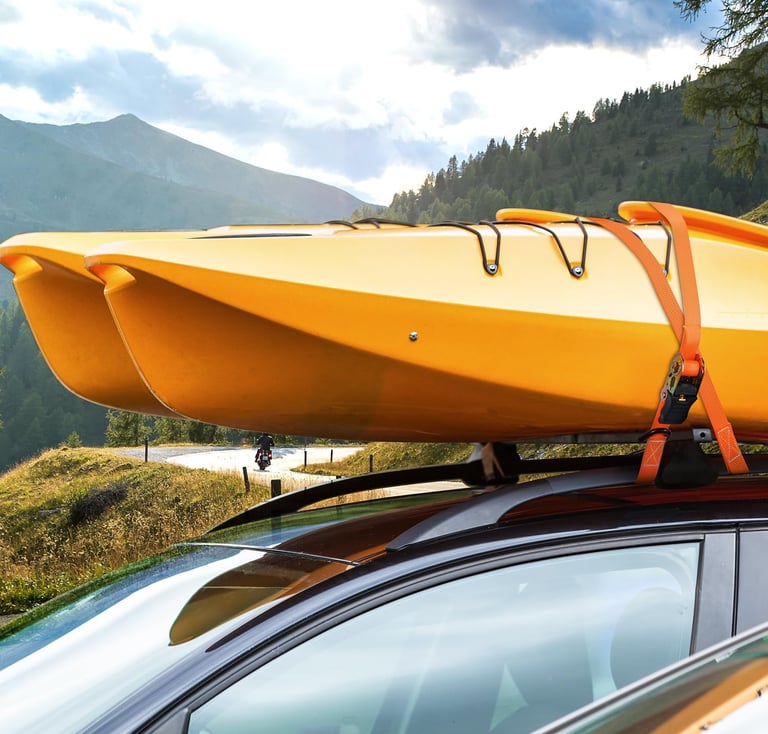
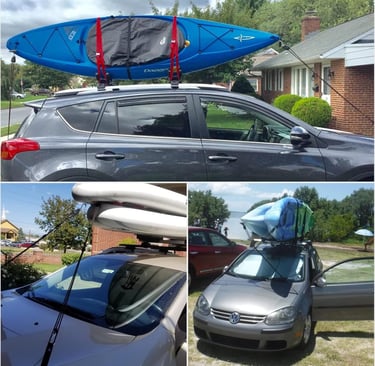
Knowing how to tie down a kayak on roof racks properly protects both your boat and everyone driving behind you. Two kayaks on one roof rack is a common setup — and a common failure point when the straps are wrong. This guide walks through the rack system, strap choice, the step-by-step tie-down routine, bow and stern lines, and how to avoid damaging your kayak in transit.
What You Need Before You Load
A roof rack system with crossbars rated for the combined weight of both kayaks — check the rack's load rating, not just your car's roof capacity.
Two cam buckle straps (or ratchet straps used with light tension) long enough to wrap each kayak and the crossbars.
Bow and stern tie-down lines — the step most people skip and the one that stops a kayak from lifting at highway speed.
Foam blocks or padding if the crossbars are bare metal, and corner protection where webbing could press on the hull.
Step by Step: How to Strap a Kayak to Roof Racks
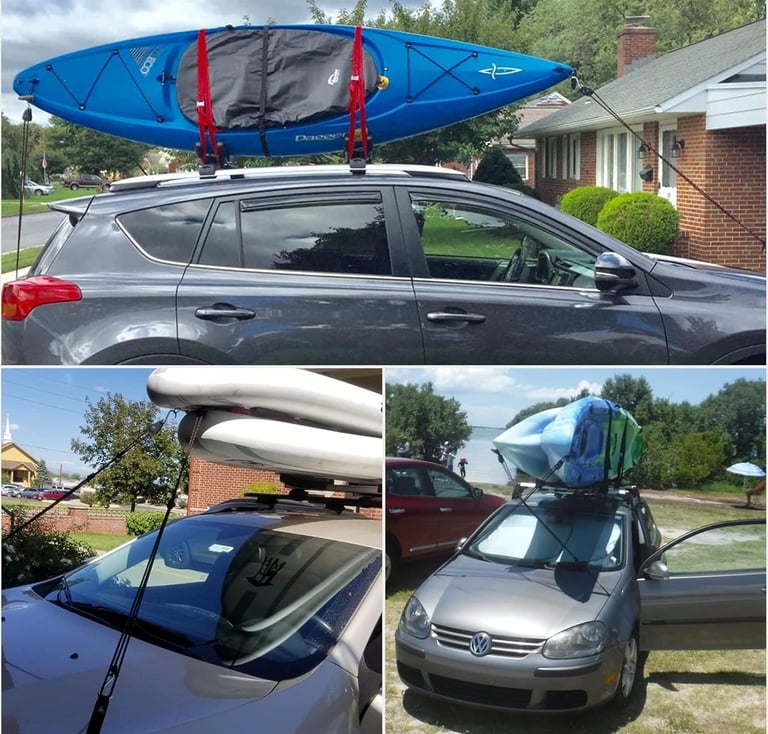
Set up the rack system; if the car has no rear tow hook, fit bolt-on hood loops so each front corner has a solid anchor. Position the crossbars parallel and confirm they are torqued to the manufacturer's spec. Place the first kayak centered on the bars, hull down (cockpit facing up) — hull-down decks are stiffer and shed wind better.
Wrap the first kayak. Throw the cam strap over the kayak, feed the tail under the crossbar (or through the door frame only if the rack supports it), and route it so the webbing runs straight — never across sharp roof edges.
Tension gently. Tighten until the kayak cannot slide by hand. A kayak is a hollow shell: crushing tension cracks the hull, so aim for firm, not maximal. If you use a ratchet strap, stop one or two clicks short of what you would use on cargo.
Load and strap the second kayak parallel to the first, evenly spaced with a padding block between the hulls so they cannot rub.
Test it. Shake each kayak firmly; if either rocks, re-tension. Then add the bow and stern lines below.
Bow and Stern Lines: The Step Most People Skip
Cross straps hold the kayaks down; bow and stern lines stop them from lifting or yawing in crosswind. Anchor the bow line to a tow hook or frame point at the front of the car and the stern line to the rear, keeping each line low and angled outward. At 65 mph, a loose kayak bow acts like an airfoil — lines turn a wobbly load into a stable one. Use rope or a dedicated tie-down line and check the tension the same way as the straps.
How to Avoid Damaging Your Kayak in Transit
Never over-tighten across the hull — the most common way of damaging your kayak is crushing the deck with ratchet tension. Cam buckles give better feel; if you prefer ratchets, our guide on how to use ratchet straps covers controlled tensioning.
Pad every contact point: bare crossbars dent polyethylene on long drives, and vibration grinds through gelcoat.
Keep webbing away from sharp roof edges and hatch openings — a cut strap at speed is a projectile.
Re-check all straps after the first 10–15 miles; wind flex works buckles loose.
Bonus: Securing Cars on a Car Trailer
The same principles apply when you transport a car on a trailer: park on level ground with the trailer brakes engaged, align the car on the centerline, attach ratchet straps to the chassis tie-down points marked in the owner's manual, and tension all four corners evenly — firm, not crushing. Inspect every strap for wear before loading; worn webbing fails exactly when the load is heaviest. For the full routine see how to set up a tie down strap.
FAQ: Tying Down Kayaks on Roof Racks
Cam straps or ratchet straps for kayaks?
Cam straps are the standard choice because their feel makes over-tensioning unlikely. Ratchet straps work if you tension carefully and use padding — the technique is in our ratchet guide above.
Hull up or hull down?
Hull down (cockpit up) for most kayaks: the deck is stronger, and the shape sheds wind. Polyethylene sit-on-tops can go either way; composite boats should always ride hull down on padded bars.
Do I really need bow and stern lines?
Yes. They are required by law in some regions, and they are what keeps the kayaks stable when a truck passes at speed. Cross straps alone let the load lift and yaw.
How fast can I drive with kayaks on the roof?
Stay at or below highway speed limits, avoid the fastest lane in crosswind, and re-check straps after the first 10–15 miles and at every fuel stop.
Outfitting a rental fleet, outfitter program or retail line? Truckbrotools manufactures cam buckle and ratchet tie down straps in a GS and TÜV certified factory with OEM/ODM support. Contact us for wholesale pricing.
Subscribe to our newsletter
sales@truckbrotools.com
CORE VALUES
Quality Craftsmanship
Safety First
Versatile Applications
Constant Innovation
Customer CommitmentCommon questions about MOQ, lead time and branding? Answers in our FAQ page or check our product catalogs.