
Tie Down Straps: Frequently Asked Questions
Answers to the questions buyers ask most about tie down straps — working load limits, US cargo securement rules, wholesale MOQ, OEM branding, certifications and shipping. Cannot find your answer? Contact our sales team for a same-day reply.
Trusted for Secure Truck Bindings.
We specialize in custom modifications to suit any technical requirements. All our products ship with a generous array of packaging and specific part number labeling at no additional charge.
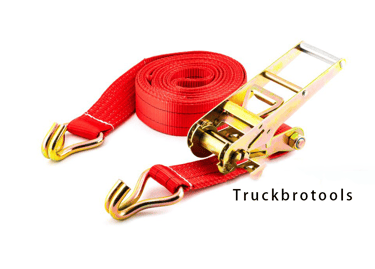
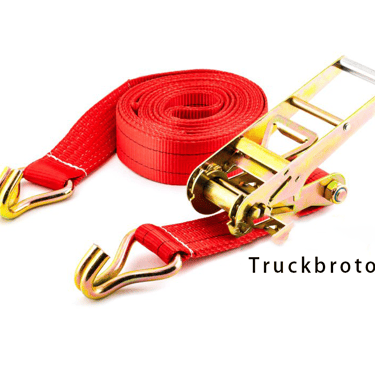
What is the difference between ratchet straps and cam buckle straps?
Ratchet straps use a geared buckle that applies much higher tension, so they are the right choice for heavy loads on flatbeds and trailers. Cam buckle straps can only be tightened by hand and release instantly, which makes them ideal for lighter or delicate cargo such as ATVs, furniture, and appliances.
Are retractable ratchet straps as strong as standard ratchet straps?
A quality retractable ratchet strap with the same webbing width and hardware has the same working load limit as a standard strap — the self-retracting spool only changes how the excess webbing is stored. Choose retractable models for faster setup; choose standard models for the lowest cost per strap.
What width ratchet strap should I use?
Match the strap width to your load: 1-inch (25 mm) straps typically handle about 833 lbs WLL, 2-inch (50 mm) straps 1,667–3,333 lbs, and 4-inch (100 mm) straps up to 5,400 lbs. Always size by the working load limit printed on the label, not the break strength.
How many tie-down straps do I need by law?
Under FMCSA 49 CFR §393.106, the combined WLL of all tie-downs must be at least one-half the weight of the cargo. In practice: at least 1 strap for articles under 5 ft and 1,100 lbs, 2 straps for 5–10 ft articles, plus 1 additional strap for every extra 10 ft.
What is the difference between break strength and working load limit (WLL)?
Break strength is the force at which a new strap fails in testing; WLL is the maximum load you may apply to it in service — typically one-third of break strength. A strap rated 10,000 lbs break strength therefore carries a WLL of about 3,333 lbs.
How do I thread a ratchet buckle?
Feed the webbing through the slot in the spool, pull 8–12 inches of slack through, then pump the ratchet handle until the strap is tight and the load is immovable. Lock the handle flat to close it, and check that the webbing sits straight with no twists.
My ratchet strap is stuck — how do I release it?
Press and hold the release tab while lifting the handle to remove tension; if it still will not open, pull the loose end of the webbing to take pressure off the spool. Never force the handle with a hammer or pry bar — it bends the release mechanism.
Can a damaged ratchet strap be repaired?
No. Cut or abraded webbing, damaged stitching, bent hooks, or a deformed ratchet mean the strap must be removed from service and replaced — load-bearing webbing may not be repaired under DOT rules. Keep spare straps in the truck so a failed strap never delays a haul.
Do I need edge protection with tie-down straps?
Yes, whenever a strap runs over a sharp or abrasive edge such as steel coil, lumber, or stone. FMCSA regulations (49 CFR §393.104) require protection that prevents the tie-down from being cut, and corner protectors also extend strap life significantly.
How do I tie down a motorcycle with ratchet straps?
Use soft loops around the handlebars or frame plus four straps — two front and two rear — and compress the front suspension about 25–30% before locking the straps. A wheel chock or a rear wheel strap stops the bike from rolling.
How often should I inspect and replace my straps?
Inspect every strap before each use and retire it immediately if you see cuts, fraying, burns, or broken stitching. UV exposure, abrasion, and moisture degrade webbing over time — replace well-used straps every 2–3 years.
What is your minimum order quantity (MOQ)?
Standard catalog items can be ordered in small trial quantities; customized straps with your logo start from 100–500 pieces per model depending on the specification. Contact our sales team for an exact MOQ on your model mix.
Can I get samples before placing a bulk order?
Yes. Stock samples are free of charge — you only cover the courier cost. Customized samples take about 5–7 days to produce after artwork confirmation.
What payment terms do you accept?
We accept 30% T/T deposit with the balance paid before shipment, which suits both trial and repeat orders. L/C at sight is available for larger contracts, and small sample fees can be paid by PayPal.
Do you offer OEM / ODM branding?
Yes. Your logo can be printed on the webbing, sewn onto labels, or woven into the strap itself, with custom colors and retail packaging available. Send your artwork (AI or PDF) and we will return a mock-up for approval before production.
What is your production lead time?
Stock items ship within about 7 days; customized OEM orders take 15–30 days depending on quantity and finishing. For peak season, place orders at least 30 days before your required ship date.
What certifications do your tie-down straps have?
Our production is certified to ISO 9001, and key models carry CE and GS marks verified by TÜV; the factory also passes BSCI social-compliance audits. Test reports are available on request.
Can I inspect or audit your factory?
Yes. Third-party inspections by SGS, TÜV, or your own QC team are welcome before shipment. We also share live production photos and pre-shipment inspection videos for every order.
Which testing standards do your straps follow?
Our ratchet straps are manufactured and tested against EN 12195-2 (lashing straps for road transport) and WSTDA T-1/T-4 specifications, with break-strength test reports provided for each production batch.
Which shipping terms and methods do you support?
We quote EXW, FOB, and CIF terms, and ship by sea freight (LCL/FCL), air freight, or express courier (DHL/FedEx/UPS). Sea freight is most economical above 1 CBM; express delivery takes 3–7 days for urgent samples.
What happens if a shipment arrives with defects?
Report any defect with photos within 30 days of arrival and we will replace the affected quantity in your next order or refund it. Every batch is inspected before packing, so defective straps are rare — and replacement is always free.
Do you have tutorials on how to use the products?
Yes. Check out our step-by-step tutorials and buying guides on the TruckBro blog, covering ratchet threading, WLL selection, and trailer cargo securement.
Subscribe to our newsletter


Professional cargo control solutions provider. High-quality tie downs, bungee cords, ropes and cargo securing products for the transportation industry.
CORE VALUES
Quality Craftsmanship
Safety First
Versatile Applications
Constant Innovation
Customer Commitment