How to Use a Tie Down: 6 Safe Steps for Any Load
How to use a tie down safely in 6 steps: pick rated straps, find anchors, thread the ratchet, tension evenly, protect edges and recheck it after 15 minutes.
How to Use a Tie Down: 6 Safe Steps for Any Load
Knowing how to use a tie down correctly keeps your cargo in place, protects other drivers and prevents damage claims. This guide walks through six steps that work for trucks, trailers and pickup beds — from checking the working load limit to the 15-minute recheck.
Quick answer: hook both ends of a rated ratchet strap to solid anchor points, route it over or around the load, feed the webbing through the ratchet, pump the handle until the load stops moving, lock it and recheck after 15 minutes.
Step 1: Choose straps by working load limit, not length
The working load limit (WLL) printed on the label is the safe rating — not the break strength, which is roughly three times higher. Add up the WLL of every strap you plan to use and make sure the total comfortably exceeds the cargo weight. Need a refresher? Read our working load limit guide.
Step 2: Inspect the strap before every use
Check the webbing for cuts, frays and burns, the hooks for bends or cracks, and the ratchet for smooth operation. Retire any damaged strap — a worn strap fails far below its printed WLL.
Step 3: Find rated anchor points
Use D-rings, E-track slots or stake pockets with proper hardware. Never hook to a tailgate hinge, plastic trim or a painted rail that was not designed for tie-down forces. If the load has sharp edges, add corner protectors before tightening.
Step 4: Route and thread the ratchet
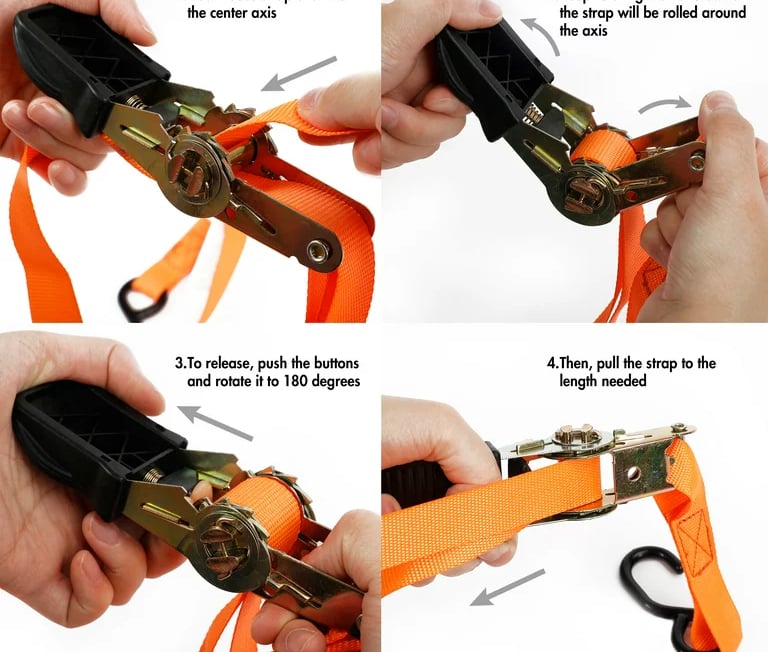
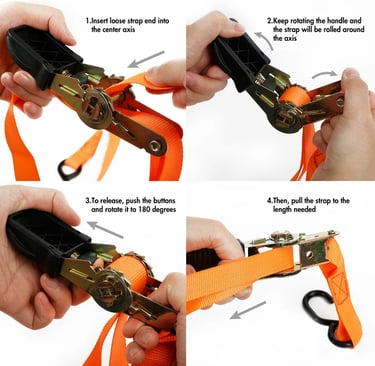
Run the strap over the load (or around a frame point), then feed the loose end through the ratchet spindle from the bottom. Pull out the slack by hand first. For the full threading motion with photos, see how to thread a ratchet strap.
Step 5: Tension evenly and lock
Pump the handle until the load is firm and does not shift when you push it. Tighten multiple straps in alternation so the load stays centered. Close the handle fully until it locks, then secure the loose tail so it cannot flap in the wind.
Step 6: Recheck after 15 minutes
Webbing settles and suspension compresses in the first miles. Pull over early, hand-check each strap and re-ratchet anything that has gone soft. Repeat at every stop on longer trips.
How to use a tie down: common questions
How many tie down straps do I need? Use at least two for most loads, and four when you need restraint in every direction. Heavier or taller cargo needs more straps or a higher WLL.
Can I use bungee cords instead of a tie down? No. Bungee cords stretch and cannot hold a load during braking. Use ratchet straps or cam buckle straps rated for the weight.
Where do I hook a tie down? Only to rated anchor points — D-rings, E-track slots or proper stake-pocket hardware. Never to a tailgate hinge, bumper or plastic body panel.
How tight should a tie down be? Firm enough that the load will not move when pushed by hand, but not so tight that you crush the cargo or damage the webbing.
For more tie-down methods by cargo type — ATVs, lawn mowers, furniture and lumber — browse our cargo securement guides.
Subscribe to our newsletter
sales@truckbrotools.com


CORE VALUES
Quality Craftsmanship
Safety First
Versatile Applications
Constant Innovation
Customer CommitmentCommon questions about MOQ, lead time and branding? Answers in our FAQ page or check our product catalogs.